The Row Size Numbers Explained: Margaux 10, 12, 15 and Beyond
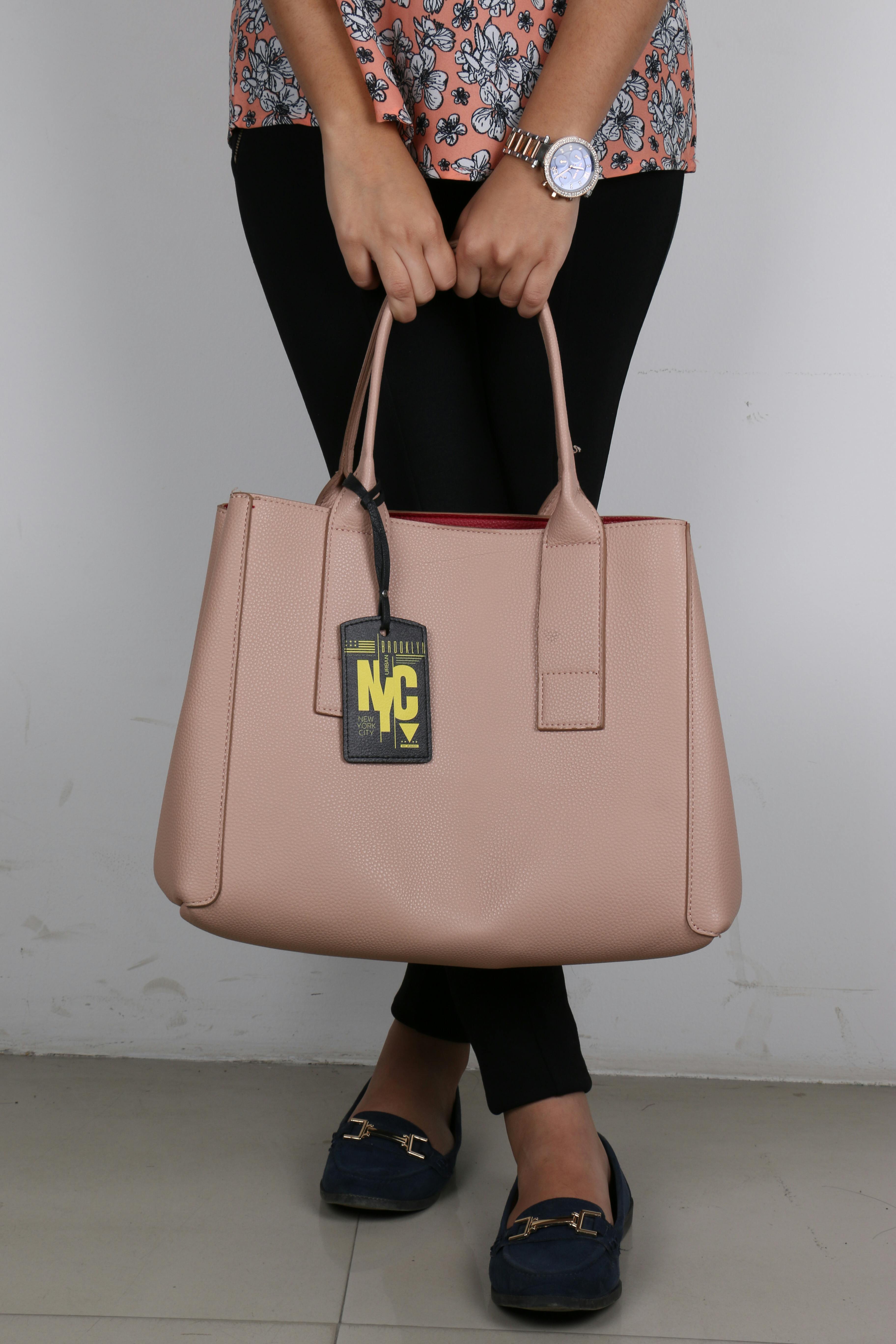
Adjectives are how most luxury houses label their sizes. You are offered a Mini, a Small, a Medium and, when the house is feeling expansive, a Jumbo, and not one of those words commits to anything you can measure. The Row does something quietly different across a large part of its line, and once you notice it the whole catalogue becomes much easier to read. The number printed in a model name gives the bag’s width in inches. Margaux 10 comes in at ten inches across. Margaux 12 measures twelve. That single fact does more practical work than any amount of styling copy, and it is the through-line of this explainer.
The convention reaches well beyond the flagship. The roll call runs Margaux 10, 12, 15 and 17, India 10.00, 12.00 and 15.75, Agnes 12 and 15, Sofia 8.75 and 10, and Marlo 12 and 14. The decimals are the tell: nobody writes 15.75 unless the figure is meant literally. What follows is how far the rule holds, where it bends, what the number leaves out, and how to turn it into a decision when you are choosing between two sizes of the same bag.
The rule, put plainly
Take the number in the name, add the word inches, and you have the width. That is the entire system, and it is applied consistently enough across the numbered families to be treated as a rule rather than a accident. It is refreshingly honest labelling, since it closes the gap between what a size sounds like and what it measures. A Small from one house can be larger than a Medium from another, but ten inches is ten inches anywhere. If you are comparing The Row bags with something you already own, the comparison becomes arithmetic rather than estimation. That is also why the brand can offer four sizes of one silhouette and confuse no one.
| Model | The size number, as width | Published dimensions ysl shoulder bag (W x H x D) |
|---|---|---|
| Soft Margaux 10 | 10 in | 10 x 7 x 7.5 in |
| Soft Margaux 12 | 12 in | 12 x 9 x 7.5 in |
| Soft Margaux 15 | 15 in | Width by name; measurements not listed |
| Margaux Shoulder 12 | 12 in as named | 14.75 x 9 x 5 in, the one exception to the rule |
| Margaux 17 | 17 in | Approximately 17 x 12 x 9 in |
| India 10.00 | 10 in | Not listed officially |
| India 12.00 | 12 in | Not officially published |
| India 15.75 | 15.75 in | Not officially published |
| Agnes 12 | 12 in | Width from the name; nothing further listed |
| Agnes 15 | 15 in | Width from the name only |
| Marlo 12 | 12 in | Width from the name only |
| Marlo 14 | 14 in | Width from the name; nothing further listed |
| Sofia 8.75 | 8.75 in | Archive model; no official listing |
| Sofia 10 | 10 in | Archive model; not listed officially |
What the number leaves unsaid
Width is only one of three dimensions, and the other two scale with it in no predictable way at all. Place the two Soft Margaux sizes with official figures behind them side by side: the 10 measures 10 x 7 x 7.5 in and the 12 measures 12 x 9 x 7.5 in. The depth stays identical at 7.5 inches, so the bigger bag is not a straight scaling of the smaller one. The height changes, gaining two inches, and so does the width, by the same amount. What that means in use is that a size up adds a taller opening and more length rather than extra depth. Anyone expecting the 12 to swallow twice as much as the 10 will find the difference smaller than the numbers imply.
The handle drop is constant as well, at five inches on both Soft Margaux sizes, and that is another thing the model number will not tell you. Five inches is a hand-carry or crook-of-the-elbow drop rather than a shoulder one, and both sizes ship with a removable shoulder strap to make up the difference. Interior fittings differ as well: the 10 has a single card slot while the 12 adds a second plus a zip pocket. Those details settle how a bag behaves day to day far more than an inch of width does. Use the number to place the bag on a scale, then read the specification to learn what it does.
The Margaux Shoulder 12, where the rule bends
One current model breaks the pattern and it is worth stating clearly rather than quietly. A twelve sits in the name of the Margaux Shoulder 12, but the brand publishes its dimensions as 14.75 x 9 x 5 in. The width in the name and the width in the specification fail to match, so the number is operating as a family size rather than as a literal external measurement on this one. That fits what the silhouette actually does, because it is a reworked shape with elongated tubular handles and narrowed gusseted side panels rather than a plain scaling-up of the tote. The lesson generalises, then, and use the number as a starting point before confirming against published dimensions and committing. If a listing offers no dimensions at all, the number is a guide and not a measurement.
What each width really holds
The step most guides omit is translating inches into daily use. Anything under ten inches wide is a phone, cardholder, keys and lipstick kit, the territory of the Sofia 8.75 and the small clutches. At ten inches you have the textbook small day bag, taking a compact wallet, a phone, sunglasses and a slim pouch without distortion. Twelve inches is the point where a bag starts absorbing a paperback, a small notebook, a folded scarf and a full-size wallet at once. Fourteen to fifteen inches is a working width, the point at which documents and a tablet stop being a squeeze. At seventeen inches, as on the Margaux 17, you are into weekend and travel territory rather than everyday use.
- 8.75 to 10 in: evenings, quick errands and anything where the bag ought to disappear.
- 12 in: the most versatile width in the line and the one most buyers settle on.
- 14 to 15 in: work, the commute and days when you carry other people’s things as well.
- 17 in: travel and overnight use, where soft structure is a feature rather than a compromise.
Price tracks width, but material moves faster still
Price follows size, but not as closely as you would expect. Take observed 2026 market prices: the Soft Margaux 10 sits at $3,650 and the Soft Margaux 12 at $4,350, so two inches of width costs around $700. Observed prices put Marlo 12 at $3,600 and $4,900 depending on the version and Marlo 14 at $5,300, a much larger step for the same two inches. Material moves in bigger jumps than size does, since India 10.00 is $3,850 in leather against $5,370 in suede, and Agnes 15 runs $5,000 in leather, $5,800 in suede and $4,300 in a canvas blend. With Agnes 12 at $4,400, the leather Agnes 15 is only $600 more for three additional inches. Where spend is being optimised, material is the larger financial decision and width the bigger practical one.
The bags with no number
Plenty of the line sits outside this system, and mixing the two conventions is where the confusion starts. The Park Tote family uses words rather than inches, running Small, Medium, Large and XL alongside the N/S Park Tote and Park Tote Three. Small bags such as the 90’s Bag, the Half Moon and the Bourse Clutch are named without any size marker at all. With those, dimensions are all you have: the Bourse Clutch is listed at 10.2 x 6.5 x 2.3 in, and the Half Moon is given officially as 8 x 13.5 x 2.5 in, with other listings differing enough that the figure is best treated as approximate. Archive models follow no rule either, with the Camden measuring roughly 9 x 12.5 x 5.25 in despite bearing no number. The N/S and E/W prefixes are shorthand for orientation, usually read as north-south for taller shapes and east-west for wider ones.
Turning inches into a decision
The practical value of a literal sizing system is that you can check it before you buy. Measure a bag you already own and like, then compare its width with the number in the model name you are considering. Do the same for the widest thing you routinely carry, whether that is a laptop, a folder or a water bottle, and add an inch of tolerance for the soft sides. Bear in mind that these are unstructured shapes in most cases, so a bag looks smaller when empty and fuller in use than any flat measurement would suggest. Caught between sizes on a soft silhouette, you will generally find the smaller one looks better and the larger one performs better. That trade-off, not the number itself, is the true choice in front of you when you buy row handbags in a numbered family.